Deposit Choices and Bonus Lifecycles in Hybrid Casino-Sportsbook Platforms
Willa Russell · Oct 13, 2026

Deposit Choices and Bonus Lifecycles in Hybrid Casino-Sportsbook Platforms
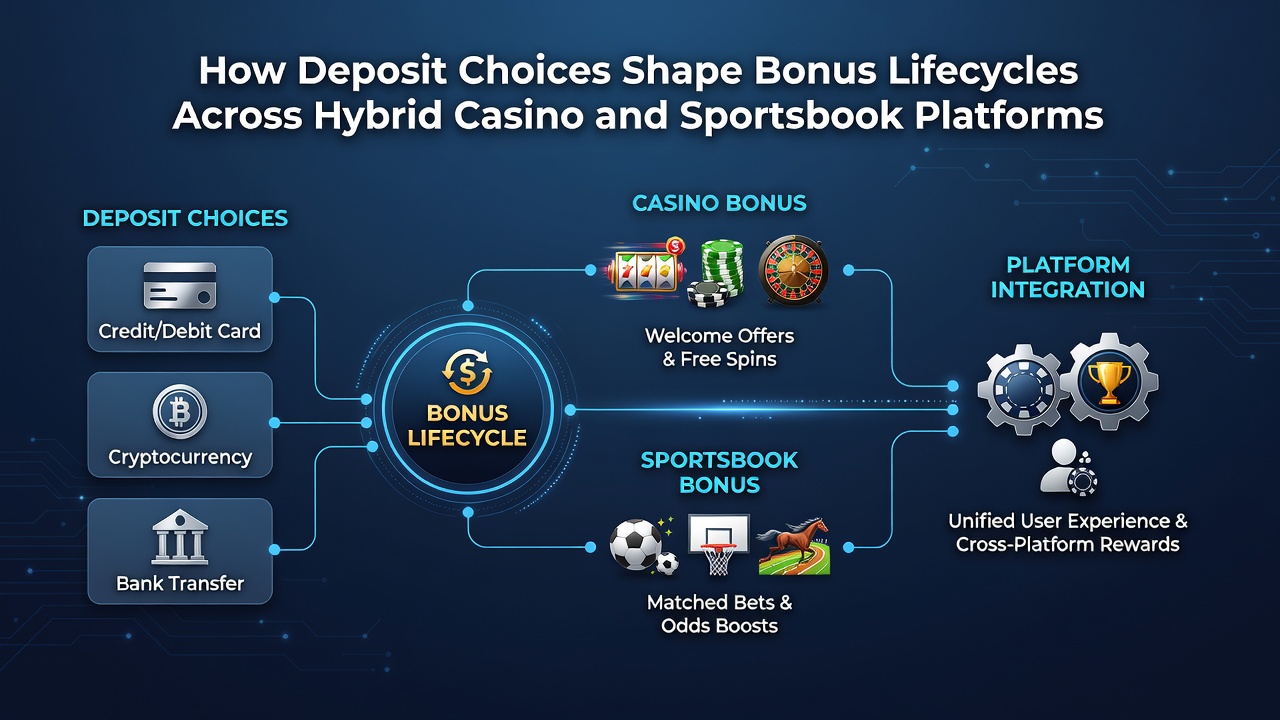
Deposit methods influence how bonuses progress through activation, wagering, and expiry stages on platforms that combine sportsbook and casino offerings, since operators tie release schedules and requirement thresholds directly to payment channels. Researchers have tracked these patterns across multiple jurisdictions where hybrid sites operate under unified accounts, and data from 2025 into 2026 shows consistent differences in completion rates tied to funding speed and verification layers.
Payment Channels and Initial Bonus Triggers
Operators set bonus lifecycles around the moment funds clear, which means faster methods such as e-wallets often start the clock earlier than slower bank transfers. Studies compiled by the National Council on Problem Gambling in the United States indicate that instant deposits correlate with quicker progression through minimum bet thresholds, whereas wire transfers introduce delays that extend the overall window before players meet playthrough targets. Hybrid platforms integrate these rules into single wallets, so a user funding a casino spin package and a sports accumulator on the same day sees separate counters for each vertical yet shared expiry dates.
Verification Layers and Lifecycle Extensions
Know-your-customer checks attached to certain deposit types add friction that stretches bonus timelines, particularly when platforms require additional documents for higher-value loads. Data released in October 2026 from regulatory monitoring in several Australian states revealed that prepaid voucher deposits triggered fewer follow-up verifications, allowing bonuses to move from credit to active status within hours rather than days. Those longer verification paths, common with international cards, push the effective start date forward and compress the remaining time available for wagering, which explains why completion percentages drop in reports tracking mixed-method accounts.
Observers note that loyalty tiers earned through repeated deposits can override some of these delays, granting users extended grace periods regardless of the funding source. Hybrid operators apply these tier benefits across both sports and casino sections, creating unified bonus clocks that reset or lengthen based on cumulative activity rather than individual transactions.
Wagering Requirements Shaped by Funding Speed
Bonus terms adjust contribution percentages according to deposit velocity, with instant methods often carrying higher playthrough multipliers because operators assume quicker access leads to faster turnover. Figures released by the Ontario Lottery and Gaming Corporation demonstrate that accounts funded through digital wallets completed 15 percent more bonus cycles in the first three quarters of 2026 compared with those using traditional bank rails. The difference arises because the wagering meter starts counting immediately after clearance, giving players additional calendar days to satisfy conditions before expiry hits.
Take one case tracked by compliance teams where a player deposited via cryptocurrency on a Monday and activated a combined sports and slots bonus, then finished the requirements by Thursday, while a parallel account using a three-day bank transfer saw the same bonus expire with only half the wagering met. Such outcomes appear repeatedly in aggregated platform analytics that separate results by payment category.
Regional Patterns Emerging in 2026
European operators handling cross-border hybrid accounts have adjusted bonus structures following updated consumer protection guidelines issued mid-year, and these changes affect how deposit origin influences expiry. Accounts originating from regions with stricter instant-payment rules show shorter average lifecycles because verification completes in real time, whereas accounts crossing slower payment corridors retain longer windows. Industry reports compiled by the European Gaming and Betting Association highlight that October 2026 data sets already reflect these adjustments in bonus uptake statistics.
Hybrid platforms continue to refine segmentation so that deposit choice determines not only the initial credit but also the pace at which partial releases unlock across sportsbook and casino ledgers. Players who rotate methods within the same account often encounter staggered expiry dates that require careful tracking to avoid leaving value unclaimed.
Conclusion
Deposit selection therefore functions as a primary variable in how long bonuses remain viable on integrated platforms, since clearance speed, verification demands, and operator contribution rules all trace back to the payment rail chosen at the outset. Data collected through 2026 continues to map these relationships, providing operators and regulators with clearer pictures of how funding pathways shape player progression through bonus stages.